A leaking water heater may release water quietly near a utility wall, then soak flooring or cabinet bases before anyone notices. The repair or replacement of the heater is separate from drying the building.
Need to report a water-damage problem? If you need help evaluating water damage, call +1 208-296-7559 or use the contact form. Requesting contact does not guarantee immediate dispatch or confirm a contractor appointment. If a situation presents immediate danger, contact appropriate emergency services first.
What should you do when a water heater begins leaking?
Possible sources to check: Tank corrosion; Pressure relief discharge; Loose connection; Failed drain valve. These are possibilities, not a substitute for tracing the real water path.
Visible clues to record: Puddles near heater; Warm damp floor; Swollen baseboard; Rust or mineral staining. Note when each clue appears, whether it follows weather or plumbing use, and whether the pattern is getting worse.
How can water travel beyond the water-heater closet?
- Confirm the source through appropriate inspection
- Document what changed and when
- Separate temporary water removal from permanent source correction
What should an estimate include after water-heater damage?
- Stop using the equipment when unsafe, seek a plumber, document where water traveled, and arrange moisture assessment beneath affected finishes.
When are local weather, irrigation or drainage conditions relevant?
Apply Caldwell weather or irrigation context only when the incident actually involves that condition.
Identify where the water actually originates
A puddle beneath a water heater may come from a tank, a drain valve, a supply fitting, a temperature-and-pressure relief discharge or another nearby source. Location of a puddle alone does not prove tank failure. A qualified plumber can diagnose the appliance and its fittings. If water has spread beyond the drain pan, restoration assessment should focus on the surrounding flooring and wall bases instead of only the heater.
Why nearby flooring can remain wet
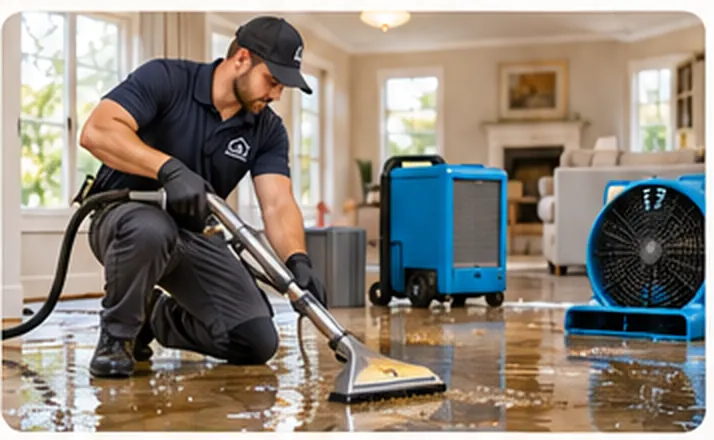
Water follows seams, baseboards and low spots; it can slip beneath LVP or laminate and saturate wood-based underlayment. Cabinet toe kicks and utility-room drywall may hold moisture after the appliance has been replaced. The visible area around the heater can dry before a concealed area does. Assessment should cover adjoining rooms where water migrated and use material-appropriate readings.
Appliance repair and building recovery are separate
Replacing the heater stops a cause of future leaking but does not automatically dry wet materials. Ask for a clear handoff between the plumber and the mitigation provider. Confirm who moves the appliance, who opens or protects flooring, who documents moisture, and when reconstruction begins. Keeping those responsibilities distinct reduces gaps where the old unit is removed but the wet subfloor is overlooked.
What to keep for insurance and warranty records
Save photographs of the equipment, model and serial information, the leaking connection if visible, invoices and the time the leak was discovered. Ask for a clear description of the failed component instead of guessing. The appliance warranty and the building insurance policy address different things; replacement of a broken product does not imply all resulting damage is covered. Claim decisions depend on actual wording and cause.
Questions to ask the evaluating professional
- What observation is most important for distinguishing the suspected source from other possible causes?
- Which test or inspection would explain puddles near heater without unnecessary demolition?
- What parts of the plan stop new water, and what parts dry or replace previously wet materials?
- What will be photographed or measured to document completion?
- Who is responsible if the water or symptom returns after the initial work?
- Can you show which assumptions may change the estimate and which approvals will be requested first?
How can the result be verified?
An effective outcome for water heater leaking in caldwell? what to do before floors are damaged is not simply a dry-looking surface. The water source is identified or properly referred for further investigation, immediate hazards are resolved, affected materials are assessed, and the owner knows what was removed, dried, repaired or left for future work. When professional drying is involved, the project record should explain completion criteria. A restoration project can still require separate plumbing, drainage or reconstruction work before the property is fully repaired.
What can cause water heater leaking? what to do before floors are damaged?
Possible causes include tank corrosion, pressure relief discharge, loose connection. Those are starting points, not a diagnosis for a particular building. The responsible contractor should identify the actual source before prescribing permanent repairs.
Which signs suggest the problem is spreading or changing?
Relevant observations include puddles near heater, warm damp floor, swollen baseboard. The visible symptoms may not show the complete moisture path, so concealed assemblies may also need assessment.
In-depth problem solving
Questions that determine the right next step
Where does water from a water heater travel first?
Leakage may spread from the heater pan across a utility-room floor, behind nearby baseboards or through joints in the floor assembly. It can move under cabinets or into lower rooms before a homeowner sees the full extent. Map the wet area using photographs, room boundaries and visible material changes. A licensed plumber should address the heater or failed connection; restoration begins with assessing the water already released.
Is a leaking temperature-and-pressure relief valve the same as a tank failure?
No. Water near the heater can originate at piping unions, drain valves, a pressure-relief discharge, condensate on some equipment or the tank itself. These failures have different repairs and safety concerns. Do not cap a pressure-relief pipe or attempt to bypass a safety device. A qualified plumber can identify the source and recommend safe isolation or replacement before cosmetic damage is repaired.
Can vinyl plank flooring trap water from a heater leak?
Even where the plank surface resists liquid, water can move through perimeter edges and seams and remain above or below the underlayment. Conditions under the floor cannot be confirmed by wiping the visible surface. Moisture measurement and inspection of adjacent baseboards may be necessary. Depending on the assembly and contamination, selective lifting or removal may be the only reliable way to evaluate the subfloor.
What evidence is useful for a water-heater insurance claim?
Record the date water was discovered, the failed connection or appliance as identified by a qualified tradesperson, photographs of impacted rooms and the steps taken to reduce further loss. Preserve receipts for emergency plumbing and mitigation. A policy may distinguish sudden accidental water release from gradual leakage or deferred maintenance; a restoration company cannot promise that every part of a claim will be covered.
How can I reduce repeat damage after the heater is repaired?
Ask the plumber whether a drain pan and appropriately routed drain are suitable for the installation and local requirements. Check nearby flooring, wall penetrations and shutoff accessibility. An alarm or leak detector can provide earlier warning but does not substitute for professional installation or inspection. If drywall and cabinetry were wet, obtain final moisture documentation before concealing those areas with finishes.
A practical observation scenario (illustrative, not a customer case study)
A water heater in a utility closet may release water through an unseen floor gap, staining the ceiling below while the visible utility-room floor looks almost dry. A room-by-room moisture map can prevent premature patching of the first visible stain.
How to make the next professional visit more productive
Before discussing work on “Water Heater Leaking in Caldwell? What to Do Before Floors Are Damaged”, prepare a one-page incident record. Include the room or exterior location, when the first symptom appeared, whether weather or plumbing use changed it, and what you have already done safely. Ask which observations the contractor can confirm, what remains uncertain, which trade should correct the source, and which affected materials need measurement. Request a written scope distinguishing emergency stabilization, drying, removal and reconstruction. If circumstances change after access or inspection, ask for the revised explanation and authorization before additional work.
What belongs in a trustworthy completion record?
A repaired appliance or hose addresses the supply problem, but does not establish that neighboring cabinets or flooring have dried. Request records showing which materials were assessed and what findings supported the final scope.
Related next steps and useful resources
Related Caldwell water-damage resources
- Appliance & Water Heater Leak Cleanup in Caldwell
- Burst Pipe Water Damage Cleanup in Caldwell
- Structural Drying & Dehumidification in Caldwell
- Signs of Water Damage Behind Walls
- Water Damage Restoration in Caldwell, ID
Should homeowners remove baseboards immediately?
Removing trim without a plan can damage finishes, disturb hidden wiring or spread contaminated material. A small clean-water leak may be assessed using noninvasive readings first, while concealed wet wallboard may require access for inspection and drying. Photograph baseboard swelling and any waterline before work begins. Discuss selective removal with the restoration contractor, including how the team will identify the boundary of wet material and when replacement trim can safely be installed.