Pooling water can reach electrical fixtures, move beneath flooring and saturate concealed assemblies before the room looks extensively damaged.
Need to report a water-damage problem? If you need help evaluating water damage, call +1 208-296-7559 or use the contact form. Requesting contact does not guarantee immediate dispatch or confirm a contractor appointment. If a situation presents immediate danger, contact appropriate emergency services first.
What should homeowners check before choosing a restoration response?
Possible sources to check: Burst supply pipe; Overflowing tub or toilet; Failed appliance hose; Stormwater entering a doorway. These are possibilities, not a substitute for tracing the real water path.
Visible clues to record: Water spreading across rooms; Wet carpet and padding; Water beneath cabinets; Dripping ceiling fixtures. Note when each clue appears, whether it follows weather or plumbing use, and whether the pattern is getting worse.
Materials that may need evaluation: Carpet padding; Drywall bottoms; Wood subfloor; Cabinet bases. A qualified assessment should match testing and treatment to the actual assembly and water category.
How can the source, symptoms and affected materials be documented?
- Check for hazards before entry
- Stop the active water source if safe
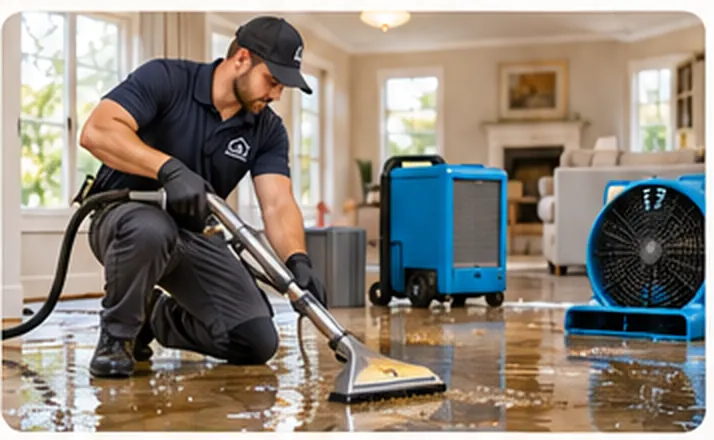
- Use extraction methods appropriate to the water category
- Map migration into adjacent rooms and cavities
Which materials need evaluation?
Depending on water migration, the inspection may involve Carpet padding, Drywall bottoms, Wood subfloor and Cabinet bases. The restoration plan should state which assemblies were actually checked and why particular materials can remain or need attention.
What determines an appropriate drying and repair scope?
- What is the source and contamination status?
- Is extraction enough, or is drying of materials required?
- What documentation will record the affected area?
Which shortcuts could make the problem worse?
- Don’t use a household vacuum on standing water
- Don’t turn on wet electrical outlets
- Don’t pump contaminated water without proper controls
What can cause emergency water removal?
Possible causes include burst supply pipe, overflowing tub or toilet, failed appliance hose. Those are starting points, not a diagnosis for a particular building. The responsible contractor should identify the actual source before prescribing permanent repairs.
Which signs suggest the problem is spreading or changing?
Relevant observations include water spreading across rooms, wet carpet and padding, water beneath cabinets. The visible symptoms may not show the complete moisture path, so concealed assemblies may also need assessment.
How can I evaluate help with Emergency Water Removal in Caldwell, ID?
A referral website may introduce you to an independent contractor; that contractor must explain its own qualifications, contracts, warranties, dispatch times and insurance. Do not assume the website itself performs the work. If you need help evaluating water damage, call +1 208-296-7559 or use the contact form. Requesting contact does not guarantee immediate dispatch or confirm a contractor appointment. If a situation presents immediate danger, contact appropriate emergency services first.
Related Caldwell water-damage resources
- Water Damage Restoration in Caldwell, ID
- What to Do After Water Damage in Caldwell
- Water Damage Restoration Cost in Caldwell: What Affects Your Bill
- Does Idaho Homeowners Insurance Cover Water Damage?
- How Long Does Water Damage Take to Dry?